Overlooked skills
Behind this administrative status, we sometimes forget everything else: the skills, experiences, ambitions, passions, and careers held before exile. The word "refugee" describes a legal status, a protection granted by a state. It says nothing about the person who holds it.
Before arriving in France, they had lives. Some had jobs, others were students; they had families, routines, plans, and a sense of belonging. Then came the move to a new country, bringing with it an administrative, social, and professional reset that few of us can truly imagine.
An uphill battle before even starting work
We talk a lot about the integration of refugees. But behind this catch-all term lie concrete, often misunderstood realities. The procedure to obtain refugee status in France takes an average of nearly ten months, and often more than a year when including the time needed to secure appointments at the prefecture. During this waiting period, access to the job market is very limited, rights to training are restricted, and uncertainty is ever-present.
Once status is granted, the obstacles do not disappear. The recognition of foreign degrees is a long and costly process that does not always succeed. Mastering French, which is essential in most sectors, requires time and access to appropriate language courses.
While 66% of refugees actively look for work as soon as they arrive, only 42% manage to enter the job market one year after receiving their residence permit. And even then, often under precarious conditions: 37% are on fixed-term contracts and 10% are in temporary work, while 30% of employed male refugees work part-time, a figure that rises to 50% for female refugees. Source
Untapped potential
This reality is not only unfair to the individuals involved; it also represents a collective loss.
At a time when many sectors are struggling to recruit, the skills and experience of refugees remain insufficiently recognized. In an opinion published in September 2024, the National CSR Platform described refugees as an "underutilized recruitment pool."
When access to employment is possible, it often leads to underemployment. In France, 88% of refugees hold blue-collar or service-sector jobs, compared to 40% in their home countries. Four out of ten people feel they are overqualified for their current jobs, and humanitarian migrants experience the highest rates of underemployment among immigrant groups.
Several factors explain this situation: the difficulty in getting certain experiences or qualifications recognized, a lack of familiarity with the codes of the French job market, and the discrimination that persists in recruitment processes.
It is precisely to help remove these barriers that DUO for a JOB supports young refugees and immigrants in building their career paths and accessing employment.
Are we truly ready to make room for them?
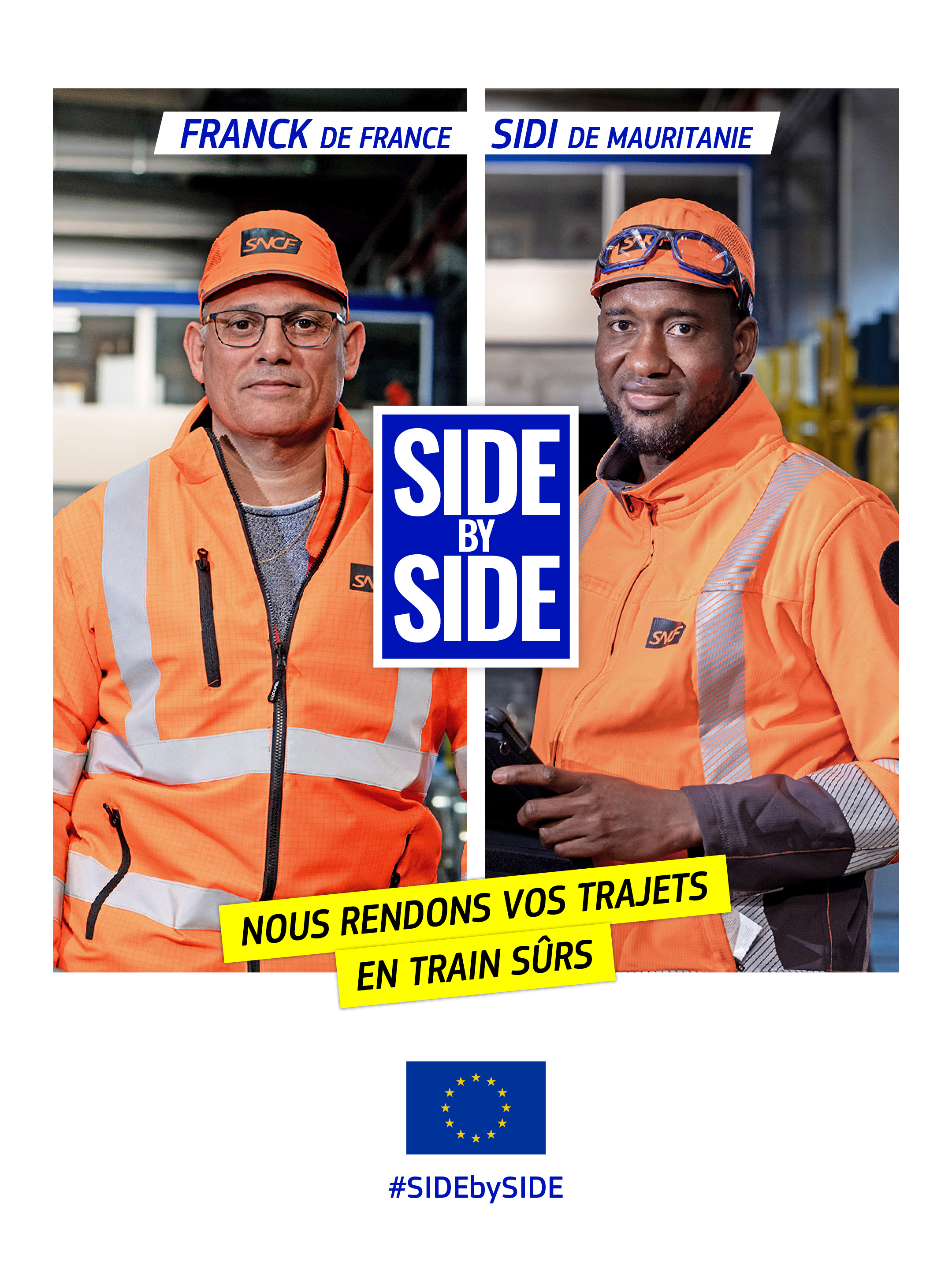
It is a question that deserves to be asked directly. Professional integration cannot be mandated. It requires concrete action: rethinking recruitment processes, providing tailored training, and offering long-term support. What Sidi and Franck embody on screen is not an exception. It is what becomes possible when the right conditions are met.
Since its inception, DUO for a JOB has supported thousands of young people, relying on a network of volunteer mentors and committed partners, including the European Commission and the Fondation Groupe SNCF, whom we thank sincerely.
World Refugee Day is more than just a symbolic date. It is an invitation to change our perspective and act accordingly.


.png)